Department of Biocommunication Development Relocates to Kyoto University

Biozipcode, Inc. is pleased to announce that, together with Kyoto University, it will establish the industry–academia collaborative course, the Department of Biocommunication Development, at the Kyoto University Graduate School of Medicine and Faculty of Medicine, and commence a joint research program under the research theme of “Development of Cell-Targeted Therapies.” This joint research aims to realize new therapeutic approaches for intractable diseases by applying cell-targeting technologies that selectively recognize specific cells and tissues. The research will include cancer research, intractable diseases such as diabetes, and in silico research and development support.
The origins of this research initiative date back to around 2015, when Studio Makyu, Inc. established a research base at the Biomedical Innovation Facility of Shiga University of Medical Science as part of a joint research program with the Department of Biochemistry and Molecular Biology. From the beginning, Studio Makyu supported not only conventional wet-lab research, including in vivo and in vitro studies, but also in silico research and development. This included the use of bioinformatics tools such as BLAST, the development of proprietary software, and large-scale computational processing using GPGPU technology. In January 2022, Biozipcode, Inc. was established to take over and further develop this joint research, and in April of the same year, a joint research laboratory for the Department of Frontier Regenerative Medicine was established within Shiga University of Medical Science.
At Shiga University of Medical Science, the research focused on the development of novel therapeutic approaches aimed at overcoming intractable diseases, including diabetes, as well as the establishment of new treatment methods using cell-targeting peptides known as “Biozipcodes.” In June 2023, research on the complete remission of diabetes in streptozotocin-induced diabetic mice, titled “Complete remission of diabetes with a transient HDAC inhibitor and insulin in streptozotocin mice,” was published in Communications Biology, marking an important step in the accumulation of research achievements. In response to these developments, Biozipcode, Inc. has strengthened its research and development framework, including by increasing its joint research funding.
Beginning in April 2026, the research activities previously conducted at Shiga University of Medical Science will be relocated and further developed at the Department of Biocommunication Development, an industry–academia collaborative course at the Kyoto University Graduate School of Medicine and Faculty of Medicine. On the Kyoto University side, researchers from the Graduate School of Medicine and Kyoto University Hospital will mainly be responsible for cancer research and the overall coordination and implementation of cell-targeting research. Biozipcode, Inc. will support research and development related to cell-targeted therapies for intractable diseases, including diabetes. The research period is scheduled for five years, from April 1, 2026 to March 31, 2031, with total research funding planned at 325 million yen, consisting of 250 million yen in direct research expenses and 75 million yen in industry–government–academia collaboration promotion expenses.
This joint research program is an industry–academia collaboration project that aims not only to advance basic research, but also to apply technologies that selectively recognize cells and tissues to the treatment of intractable diseases, with the goal of future implementation in clinical medicine. The handling of research outcomes, including confidentiality, academic publication, patents, and other intellectual property rights, will be managed under a framework that takes into account both the academic mission of the university and the commercialization and social implementation objectives of the company.
Through its joint research with Kyoto University, Biozipcode, Inc. will further accelerate the research and development of cell-targeted therapies based on Biozipcode technology. The company will also promote collaboration with pharmaceutical companies and research institutions in Japan and overseas, with the aim of creating and socially implementing new therapeutic strategies for intractable diseases.
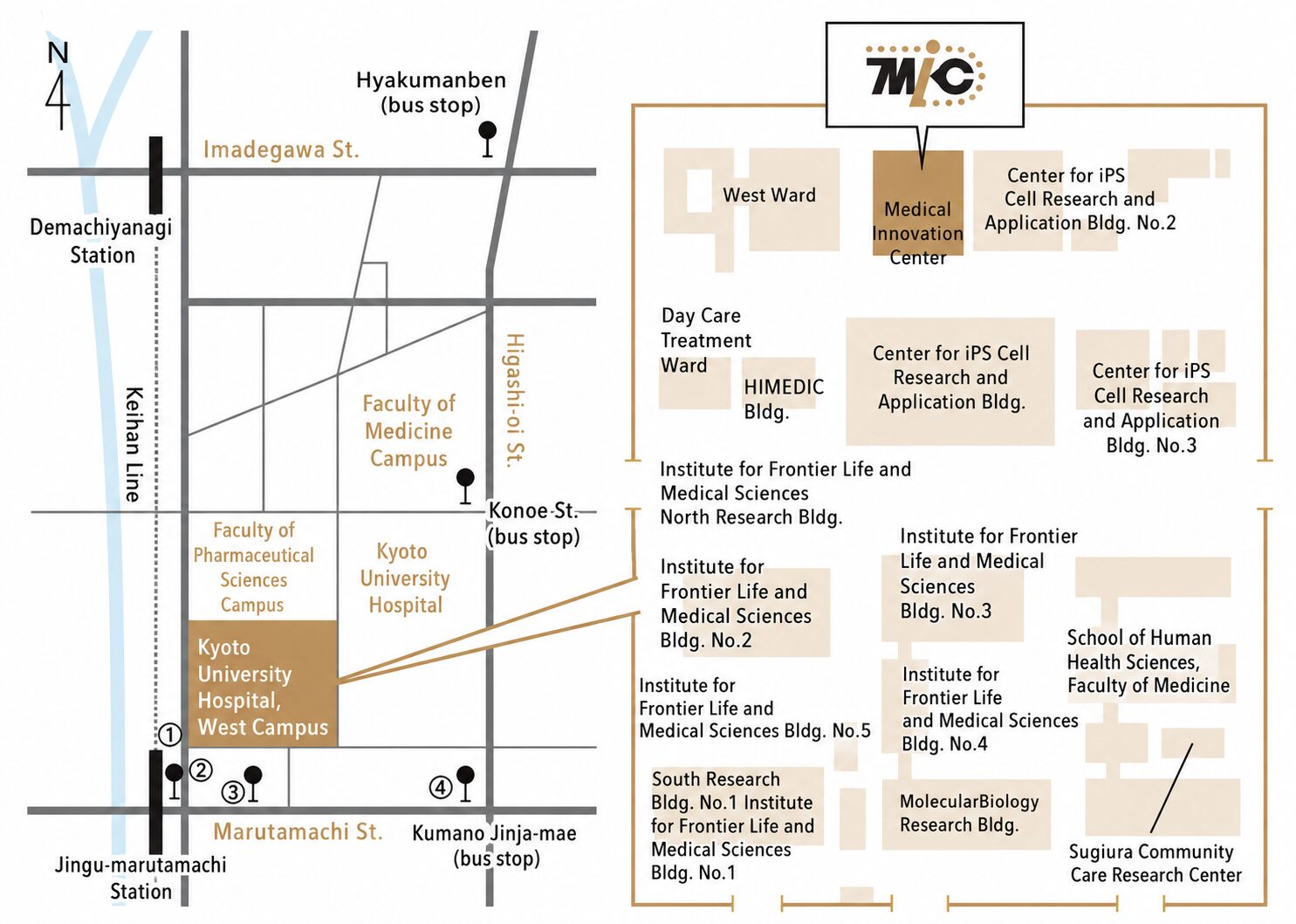
Address (Kyoto University, Graduate School of Medicine and Faculty of Medicine Department of Biocommunication Development)
53 Shogoin Kawahara-cho, Sakyo-ku,Kyoto 606-8507, Japan
Medical Innovation Center 5F
Direct Line to Laboratory
+81-75-366-7453
Web Site (Department of Biocommunication Development)
https://biozipcode.org/