
Advancing diabetes stem cell research toward biomarkers in human peripheral blood.
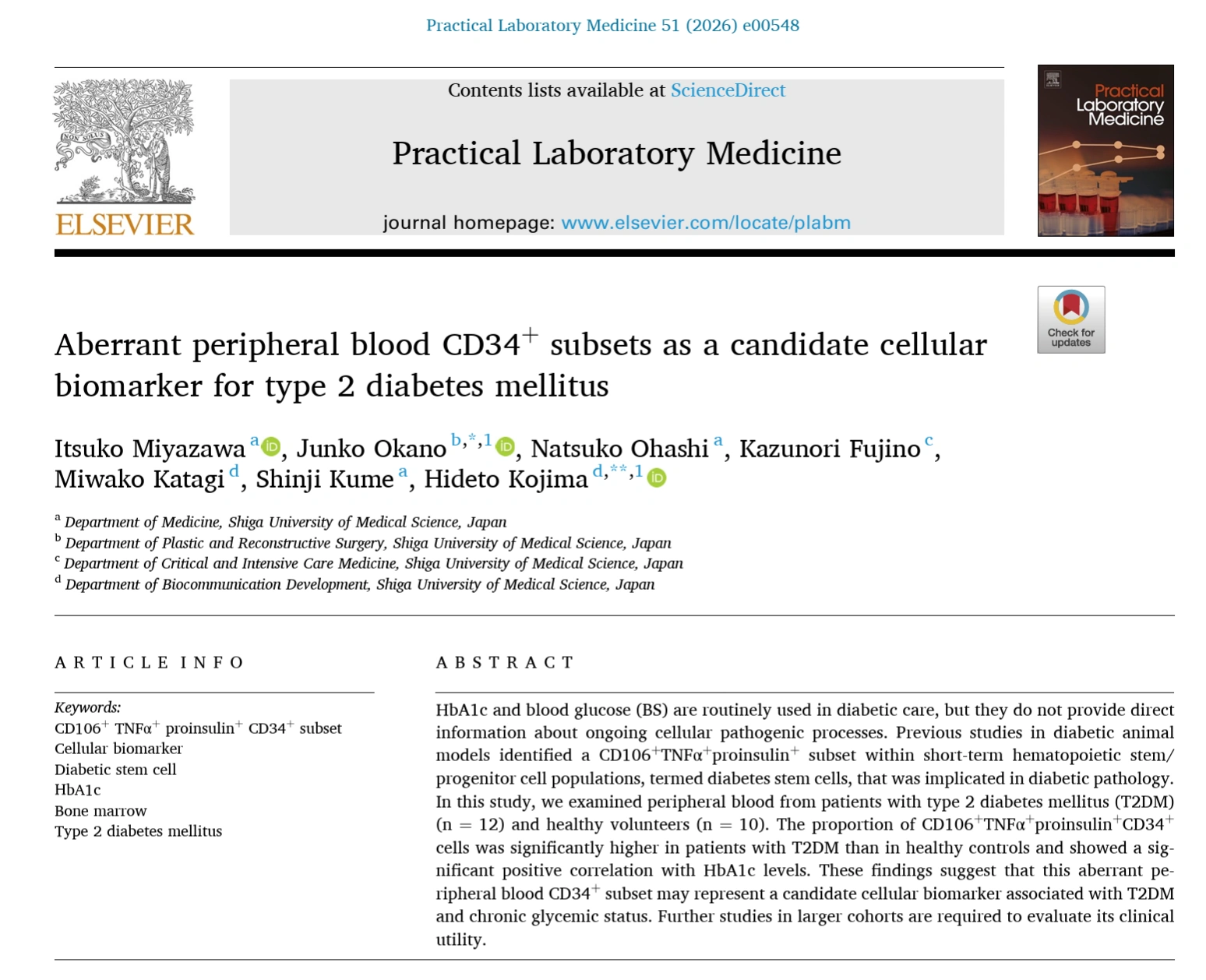
A study by a research team including Hideto Kojima, investigating an abnormal CD34-positive cell population in the peripheral blood of patients with type 2 diabetes, has been published in Practical Laboratory Medicine.
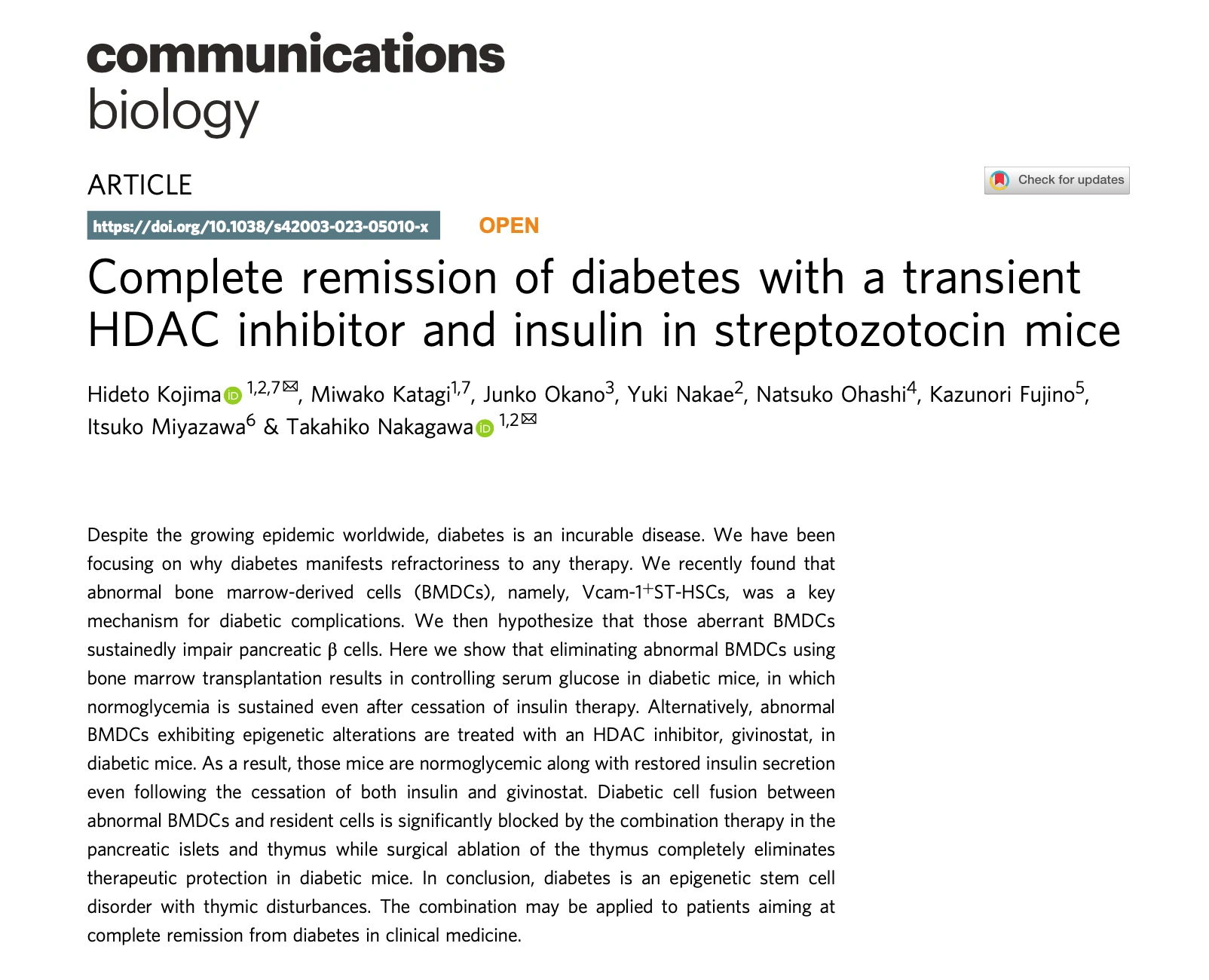
Previous studies in diabetic mouse models have investigated the potential involvement of abnormal hematopoietic stem and progenitor cells expressing CD106, TNFα, and proinsulin in diabetes and its complications. This study extends that research hypothesis to the analysis of human peripheral blood.
A Distinct Cell Population Is Elevated in Patients with Type 2 Diabetes
The study compared peripheral blood samples from 12 patients with type 2 diabetes and 10 healthy volunteers. The proportion of CD34-positive cells co-expressing CD106, TNFα, and proinsulin—the CD106⁺TNFα⁺proinsulin⁺CD34⁺ subset—was significantly higher in patients with type 2 diabetes.
The proportion of this cell population also showed a significant positive correlation with HbA1c, indicating an association with chronic glycemic status.
A New Possibility for Assessing Cellular Changes Associated with Diabetes
These findings suggest the potential for a cellular biomarker that captures abnormal cell states associated with diabetes through peripheral blood analysis, complementing assessments based on blood glucose and HbA1c.
Biozipcode, Inc. regards this study as part of the scientific foundation for its ongoing research into diabetes stem cell biomarkers and potential future companion diagnostics.
This was an exploratory study involving a small number of participants. Further validation in larger patient cohorts is needed to establish the clinical utility of this cell population. Biozipcode will continue to advance scientific validation, deepen understanding of diabetes, and pursue research and development of new diagnostic and therapeutic technologies.
Publication Details
Aberrant peripheral blood CD34+ subsets as a candidate cellular biomarker for type 2 diabetes mellitus
Authors: Itsuko Miyazawa, Junko Okano, Natsuko Ohashi, Kazunori Fujino, Miwako Katagi, Shinji Kume, Hideto Kojima
Journal: Practical Laboratory Medicine. 2026;51:e00548.
DOI: 10.1016/j.plabm.2026.e00548


Leave A Comment