

TECHNOLOGY LICENSING
Technology Licensing
Turn research findings
into development assets partners can advance.
Promising laboratory results alone do not bring new medicines or diagnostics to patients.
To move to the next stage of development, pharmaceutical companies and research institutions need more than a scientific hypothesis. They need reproducible data, intellectual property, target validation, measurement methods, a product concept, and a clear plan for the next data to collect.
Biozipcode, Inc. aims to develop findings from research into “diabetes stem cells” (DSCs), a proposed research term, and Biozipcode™ cell-targeting technology into
technology packages that partners can assess, license, and advance through development.
That is the approach behind our technology licensing program.
Some technologies described are at the research, preclinical, or early human research stage. Their inclusion does not imply established efficacy or safety in humans or regulatory approval.
This page does not solicit investments, deposits, loans, or other funds from the general public. Technology licensing, collaborative research, co-development, business partnerships, and other transactions will be discussed individually and conducted under formal agreements after reviewing the relevant technology, intellectual property, and stage of development.
OUR LICENSING PHILOSOPHY
Beyond a patent license:
technology ready for the next development decision.
For us, technology licensing involves more than presenting a patent number.
Take diabetes stem cell research: Which cells are the therapeutic target? What evidence connects them to disease? How far has the hypothesis been tested in humans? And which data would justify moving toward clinical development?
Biozipcode™ requires more than a peptide that binds a cell. Target selectivity, differences from normal cells, payload compatibility, biodistribution, and manufacturability must be tested to define a product candidate.
We therefore view a licenseable package as encompassing:
Intellectual Property
+ Scientific Evidence
+ Know-how
+ Assay / Platform
+ Development Plan
These elements together form a technology package.
THREE LICENSING OPPORTUNITIES
Three principal licensing areas emerging from our research.
DIABETES THERAPEUTICS
Disease-Modifying Therapies for Diabetes
Our diabetes research asks more than how to lower blood glucose. It asks whether we can intervene in the cell states that may sustain diabetes.
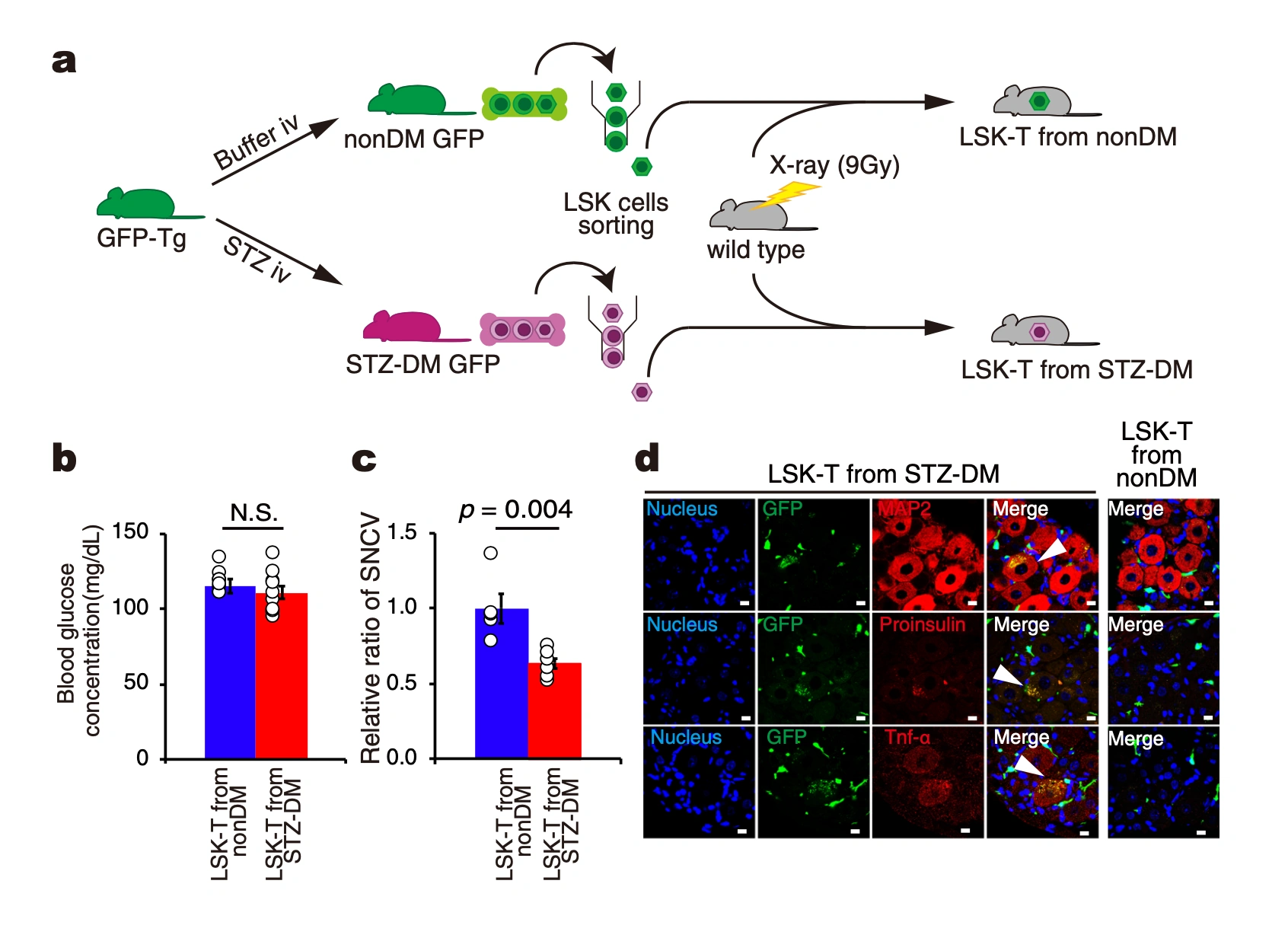
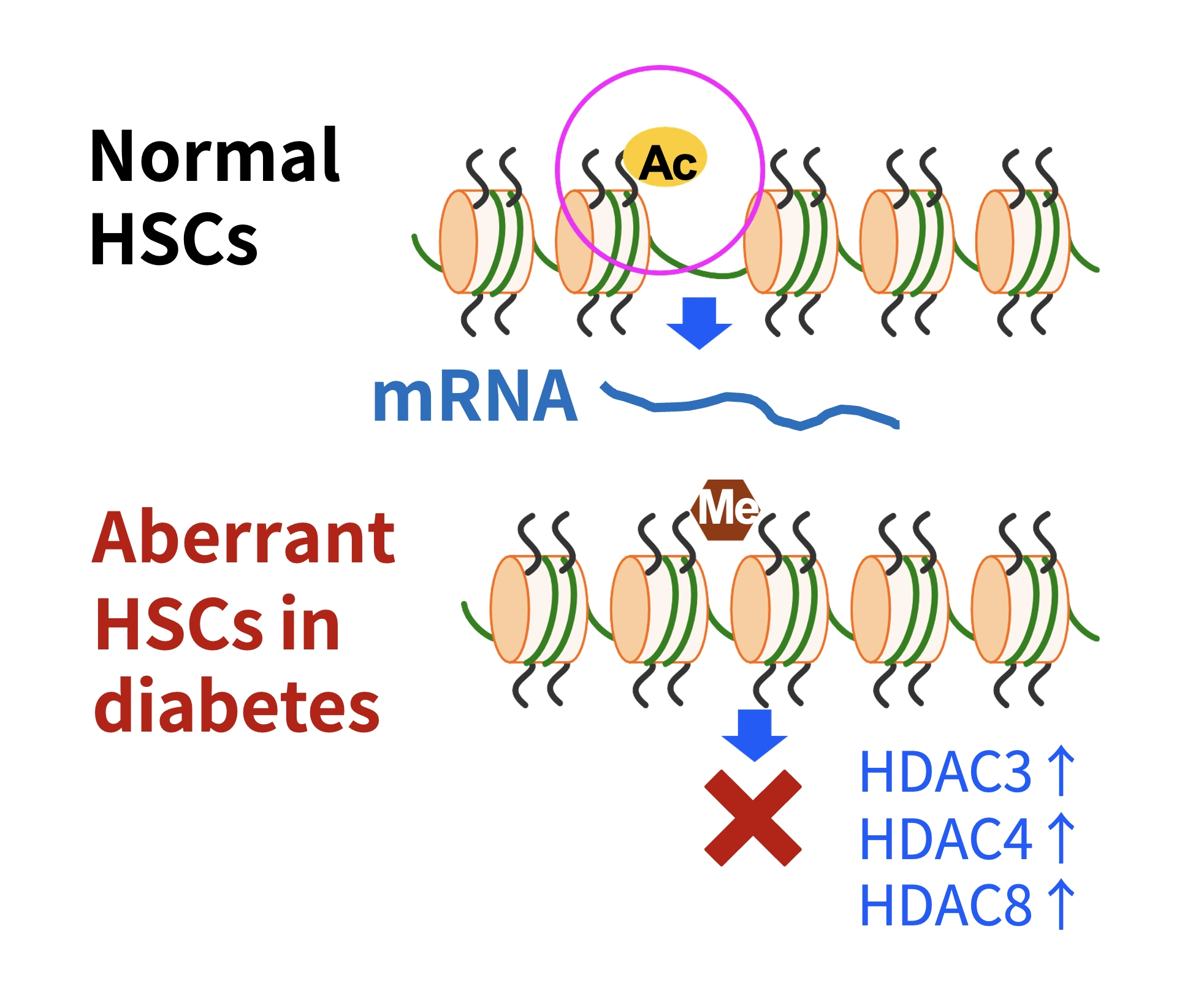
Our research team has studied whether abnormal hematopoietic stem cells and bone marrow-derived cells affect pancreatic β-cell regeneration and complications in models of diabetes.
A 2023 study in Communications Biology reported sustained normoglycemia in mice with STZ-induced diabetes after a temporary course of insulin and the HDAC inhibitor givinostat.
Building on this preclinical research, we are investigating an approach involving:
stabilization of hyperglycemia
↓
intervention in abnormal cell states
↓
restoration of endogenous insulin secretion and regenerative capacity
↓
durable effects after treatment ends
Our goal is to develop this as an investigational disease-modifying therapy.
For this area, we aim to define the therapeutic candidate, dose, formulation, target population, biomarkers, and nonclinical program within a single product concept, and explore licensing or co-development with pharmaceutical partners.
BIOMARKER & COMPANION DIAGNOSTICS
Technology to Measure Diabetes Stem Cells
Even if target cells exist, precision therapeutic development requires a way to measure them in individual patients.
Biozipcode, Inc. is studying biomarkers to detect and assess candidate diabetes stem cells in peripheral blood.
A peer-reviewed 2026 paper analyzed peripheral blood CD34-positive cell subsets in people with type 2 diabetes as a candidate cellular biomarker, marking an early move from work centered on animal models toward human validation.
In the future, we aim to develop a process to:
identify eligible patients
↓
treat them
↓
reassess cell states after treatment
This approach could support patient stratification and potential companion diagnostics.
With diagnostics, testing, and medical device companies, we can explore research-use assays, flow cytometry/FACS, cell capture, Biozipcode™ labeling, in vitro diagnostics (IVD), and companion diagnostics according to each partner’s capabilities.
BIOZIPCODE™ CELL TARGETING
Deliver a partner’s therapy to the cells that need it.
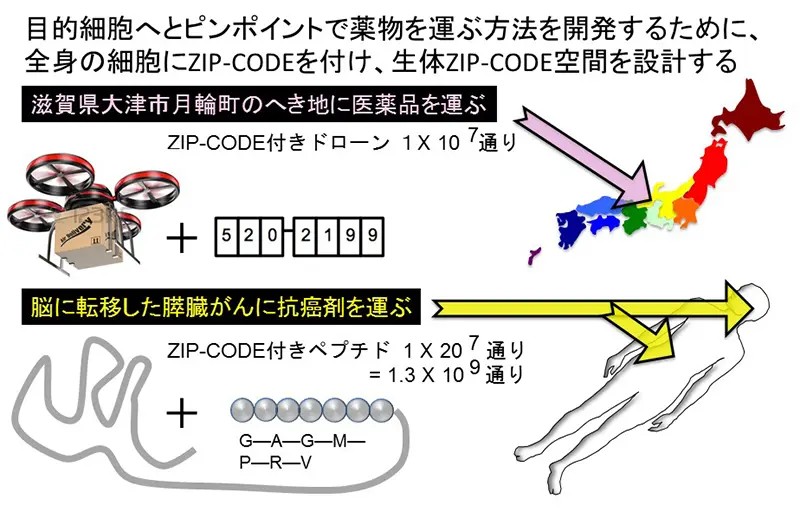
Biozipcode™ is a cell-targeting platform for discovering short peptides that bind specific cells and tissues.
It combines phage display, in vivo biopanning, NGS, and bioinformatics to find candidate sequences that bind the intended cells.
This research base has been applied to studies of targeted gene and siRNA delivery to dorsal root ganglia, the spinal cord, and microglia, as well as research into targeting cancer cells.
Our priority in licensing Biozipcode™ is to create a defined product with a partner’s asset, using the platform’s cell-targeting technology.
For example, a partner may face challenges such as:
A compound has activity, but off-target effects complicate development.
A nucleic acid therapeutic does not reach the intended cells effectively.
Disease-specific cells are known, but cannot yet be treated selectively.
To address such challenges, we can combine:
Partner Payload × Biozipcode™ × Delivery System
We aim to build a new development asset together.
BUILDING PRODUCT-SPECIFIC IP
From a platform to a protectable product candidate.
When pharmaceutical companies consider licensing, an interesting technology alone is not enough. They need to know:
What can ultimately be protected exclusively?
That is the central licensing question.
As Biozipcode™ research advances, we aim to develop product-specific intellectual property covering novel peptide sequences that recognize defined cells, related sequences, conjugates with payloads, drug delivery systems and formulations, uses, and patient selection.
That means developing:
Platform IP
and
Product-Specific IP
for the eventual product.
Even when using known therapeutic molecules, we can pursue multilayer protection beyond patents on the existing compounds themselves, potentially combining novel targeting peptides, compositions, formulations, methods of treatment, patient selection, and companion diagnostics.
EXISTING INTELLECTUAL PROPERTY
Intellectual property arising from diabetes research.
Our principal published international patent families include:
PCT/JP2020/039044
Diabetes therapy targeting abnormal stem cells
PCT/JP2020/039045
Diabetes therapy using stem cell migration
PCT/JP2022/008036
Treatment, diagnosis, and detection of diabetes and its complications
PCT/JP2022/040140
Treatment of diabetes and its complications through HDAC modulation
These are the main published families.
They provide an intellectual property foundation for our current research into diabetes therapies, diabetes stem cell biomarkers, patient selection, and diagnostics.
For Biozipcode™, we plan to develop new intellectual property around future targeting peptides and specific product configurations.

WHAT IS READY TODAY?
What do we know today,
and what comes next?
We do not overstate the maturity of our research in technology licensing.
For example, the diabetes therapy program has peer-reviewed preclinical proof of concept in mice. That does not mean an IND/CTA-ready nonclinical package has been completed.
Evidence to date includes:
disease hypothesis
→ therapeutic proof of concept in animal models
→ early human biomarker research
These findings provide a foundation.
The next stage requires:
product definition
→ dose / schedule
→ PK / PD
→ regulated toxicology
→ CMC
→ GMP clinical supply
These development activities remain to be completed.
Similarly, although Biozipcode™ has a research history in peptide discovery and targeted delivery, each product candidate will require assessment of affinity, specificity, biodistribution, payload compatibility, manufacturability, and other properties.
We believe that clarifying what has been completed and what remains to be done is essential for a sound technology assessment.

A LICENSING PATH THAT REDUCES RISK
Licensing can proceed in stages.
Early research technologies carry scientific risk for a prospective licensee.
Biozipcode, Inc. therefore considers staged licensing arrangements that fit the technology’s maturity.
We can begin with collaborative research to test reproducibility in target cells and the selectivity of Biozipcode™.
If the results meet agreed criteria, a partner can exercise an option to license.
After in vivo proof of concept and nonclinical data are obtained, the parties can proceed to a full license or co-development agreement.
This staged process can follow:
Research Collaboration
→ Data Milestone
→ Option
→ License / Co-development
It allows development to proceed while reducing scientific risk step by step
For Partners

Building on diabetes stem cell research and Biozipcode™ cell-targeting technology, we are advancing new diagnostic and therapeutic technologies for difficult-to-treat diseases.
We work with pharmaceutical companies and research institutions to advance research, development, and practical applications based on diabetes stem cell research, Biozipcode™, and related research platforms.

We conduct collaborative research with universities, research institutions, medical institutions, and companies in fields including diabetes, cancer, regenerative medicine, biomarkers, and drug delivery systems (DDS).
We are exploring technology licensing for research findings involving diabetes treatment and diagnosis, abnormal stem cells, HDAC-related technologies, and Biozipcode™.

A cell-targeting platform that identifies short peptide sequences recognizing specific cells and tissues for potential diagnostic and drug delivery applications.

We are considering strategic investment and equity partnerships that offer business synergies and support research, development, and practical applications over the medium to long term.

Access materials on Biozipcode, Inc., its research and technologies, pipeline, research collaborations, licensing, and related topics.