
Academic Collaboration Overview
Turning university research into technology that reaches people.
Bringing new diagnostics and therapies to patients takes expertise across medicine, life sciences, information science, clinical care, manufacturing, regulatory affairs, and intellectual property. No single company or laboratory can cover every step.
Through joint research with universities and research institutions, Biozipcode, Inc. aims to turn discoveries from basic research into reproducible technologies for diagnostics, treatment, and drug discovery.
Since 2026, we have collaborated with Kyoto University, Graduate School of Medicine and Faculty of Medicine Department of Biocommunication Development, an industry–academia research department, on research and development focused on cell-targeted therapy. We will continue to work with universities, healthcare institutions, and companies in Japan and abroad to advance the practical application of research findings.
The collaborations and development programs described on this page include basic research, preclinical research, and exploratory human studies. Collaboration does not establish the efficacy or safety of a therapy or diagnostic, its commercialization, or regulatory approval.
The Department of Biocommunication Development is a research organization at Kyoto University, not a Biozipcode, Inc. office or laboratory. Biozipcode, Inc. participates as a corporate research collaborator.
ROLES
The roles of universities and companies.
Effective academic collaboration draws on the strengths of universities and companies while keeping their roles clear.
ACADEMIA
Universities & Research Institutions
Universities and research institutions lead basic research, investigate disease mechanisms, and scientifically validate cell-targeting technology to generate findings that could inform new diagnostics and therapies.
They use human samples, animal models, organoids, data analysis, and other methods to assess reproducibility and medical relevance.
BIOZIPCODE, INC.
Biozipcode, Inc.

Biozipcode, Inc. works to develop university research findings into intellectual property, diagnostic technologies, therapeutic candidates, and joint development programs with a path toward practical use.
Through partnerships with pharmaceutical companies and others, clinical development, regulatory work, manufacturing, and licensing, we aim to bring research advances closer to patient care.
RESEARCH THEMES
Our Collaborative Research Areas
DIABETES STEM CELLS
Diabetes Stem Cells (DSCs)
We use “diabetes stem cells” (DSCs) as a research term for abnormal hematopoietic stem cells and bone marrow-derived cells that may contribute to the persistence of diabetes and its complications. We are investigating their disease-related properties, whether they can be identified in humans, and their possible clinical significance.
Research using human samples and clinical information is essential to test whether findings from animal models apply to human diabetes.
BIOZIPCODE™
Cell-Targeting Technology
We use in vivo biopanning, NGS, bioinformatics, and other methods to discover and analyze short peptide sequences that recognize specific cells or tissues.
We aim to explore Biozipcode™ candidates for applications in diagnostics, cell capture, drug delivery systems (DDS), and gene and nucleic acid delivery.
HUMAN VALIDATION
Validation in Human Disease
Understanding the significance of candidate diabetes stem cells and Biozipcode™ sequences in actual human disease is a key step toward practical application.
Future validation will require
- human samples
- patient cohorts
- flow cytometry and FACS
- comparisons by disease type and severity
- longitudinal assessment before and after treatment
and other approaches.
HUMAN-RELEVANT MODELS
Human-Relevant Research Models
Beyond animal models, we are developing research models using
- humanized animals
- organoids
- ex vivo tissues
- human-derived cells
to better reflect human disease and treatment response.
Academic Collaboration Overview
Through joint research with universities and research institutions, we aim to turn basic research findings into diagnostic and therapeutic technologies that can benefit society.
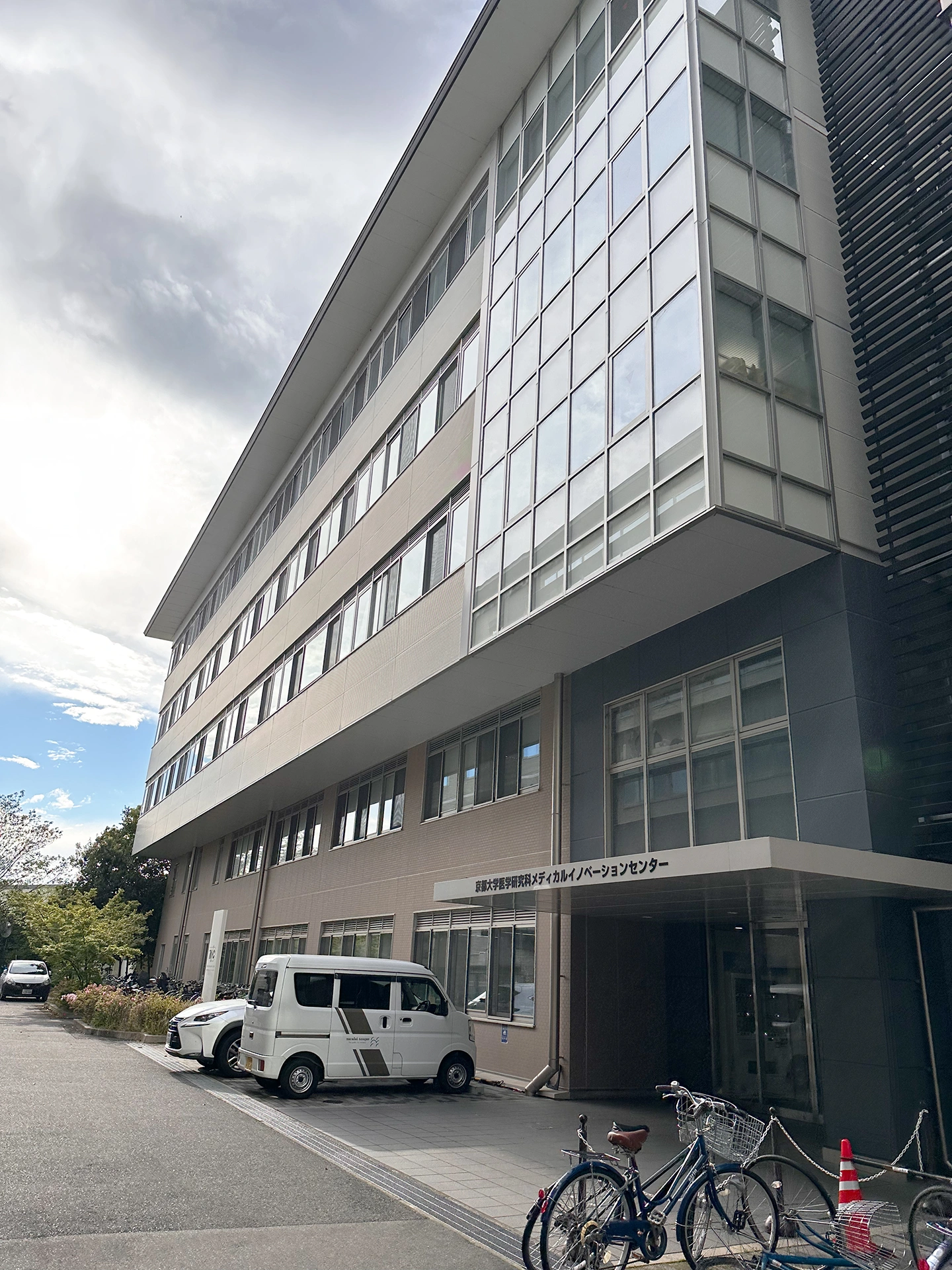
Through joint research with Kyoto University’s Graduate School of Medicine and Faculty of Medicine, we study difficult-to-treat diseases using cell-targeting technology.

We conduct basic and applied research with universities, research institutions, and healthcare organizations in Japan and abroad, drawing on their complementary expertise.