
TARGETING DIABETES STEM CELLS FOR COMPLETE REMISSION
Complete Remission of Diabetes and Elimination of Diabetes Stem Cells
Going beyond blood glucose to address what may sustain diabetes.
In current diabetes care, managing blood glucose and HbA1c and preventing the onset or progression of complications are essential.
Yet normalizing blood glucose alone may not fully reverse the cellular changes caused by diabetes.
Our research examines whether abnormal hematopoietic stem cells and bone marrow-derived cells arising in diabetes may interfere with pancreatic beta-cell regeneration and tissue repair throughout the body, contributing to persistent diabetes and its complications.
For research purposes, our team refers to the abnormal hematopoietic stem cell population thought to be involved as “diabetes stem cells” (DSCs).
Our goal is not merely to normalize blood glucose temporarily, but to address the disease processes that sustain diabetes.
Diabetes stem cells remain a research concept and are not an established diagnostic criterion for diabetes. The therapeutic candidates, Biozipcode™, and 5-ALA discussed here are not approved treatments for complete remission of diabetes.
Patients should not stop or reduce their prescribed diabetes medicines or insulin on their own. Always consult your physician about treatment.
FROM GLUCOSE CONTROL TO DISEASE MODIFICATION
From blood glucose control to addressing the underlying disease.
Persistent high blood glucose can cause changes in organs throughout the body.
For more than 20 years, our research team has studied the relationship between abnormal bone marrow-derived cells in diabetes and damage to tissues including
- the pancreas
- nerves
- the kidneys
- the liver
- blood vessels
- the skin
- the intestines
- bones
- the immune system
among others.
This work has led us to propose the following disease model:
Persistent high blood glucose
↓
Hematopoietic stem and bone marrow-derived cells become abnormal
↓
Abnormal cells travel to tissues throughout the body
↓
Beta-cell regeneration and organ repair are disrupted
↓
Diabetes and its complications persist
We are studying whether breaking this cycle could lead to complete remission of diabetes.
EPIGENETIC MEMORY
From targeting molecules to targeting cells.
Epigenetic abnormalities are a major focus of diabetes stem cell research.
Epigenetics refers to processes that regulate gene activity without changing the DNA sequence itself.
Changes in HDAC-related expression have been observed in abnormal hematopoietic stem cells in diabetes models.
We are therefore investigating a possible sequence:
High blood glucose
↓
Epigenetic abnormalities arise in hematopoietic stem cells
↓
Abnormal cellular states remain even after blood glucose improves
↓
Diabetes becomes difficult to resolve
This remains a research hypothesis.
In other words, normalizing the “memory of disease” that may remain in cells could be one key to complete remission.
BETA-CELL REGENERATION
Restoring natural regeneration, rather than simply replacing beta cells.
The function of insulin-secreting beta cells is critical in diabetes care. Under certain conditions, beta cells can regenerate and proliferate.
Our research examines whether abnormal bone marrow-derived cells arising in diabetes may alter the blood vessels and regenerative environment around pancreatic islets, hindering normal beta-cell regeneration.
We are therefore studying ways to go beyond treating beta cells alone and remove the barriers to beta-cell regeneration.
THE ROLE OF THE THYMUS
Restoring the immune system as well as addressing the bone marrow.
A 2023 mouse study also reported a role for thymus function in complete remission.
The thymus plays an important role in developing the immune system, including T cells that identify and remove abnormal cells. The research suggests that diabetes may also impair the thymus, potentially reducing its ability to eliminate diabetes stem cells and their descendants.
We are investigating three potentially interrelated factors in complete remission:
Addressing abnormal cells in the bone marrow
+
Regenerating pancreatic beta cells
+
Restoring immune and thymus function
These factors may influence one another.
THE THERAPEUTIC HYPOTHESIS
Therapeutic Hypothesis for Complete Remission
Our current research hypothesis considers diabetes in terms of both high blood glucose and the underlying abnormal cellular states and impaired regeneration. We organize our approach to complete remission into three steps: stabilizing blood glucose, addressing abnormal cellular states, and restoring the body’s natural capacity to regenerate.
STEP 1
Stabilize Blood Glucose

First, manage blood glucose appropriately with insulin or other treatments to reduce conditions that may give rise to new abnormal cells.
STEP 2
Address Abnormal Cellular States
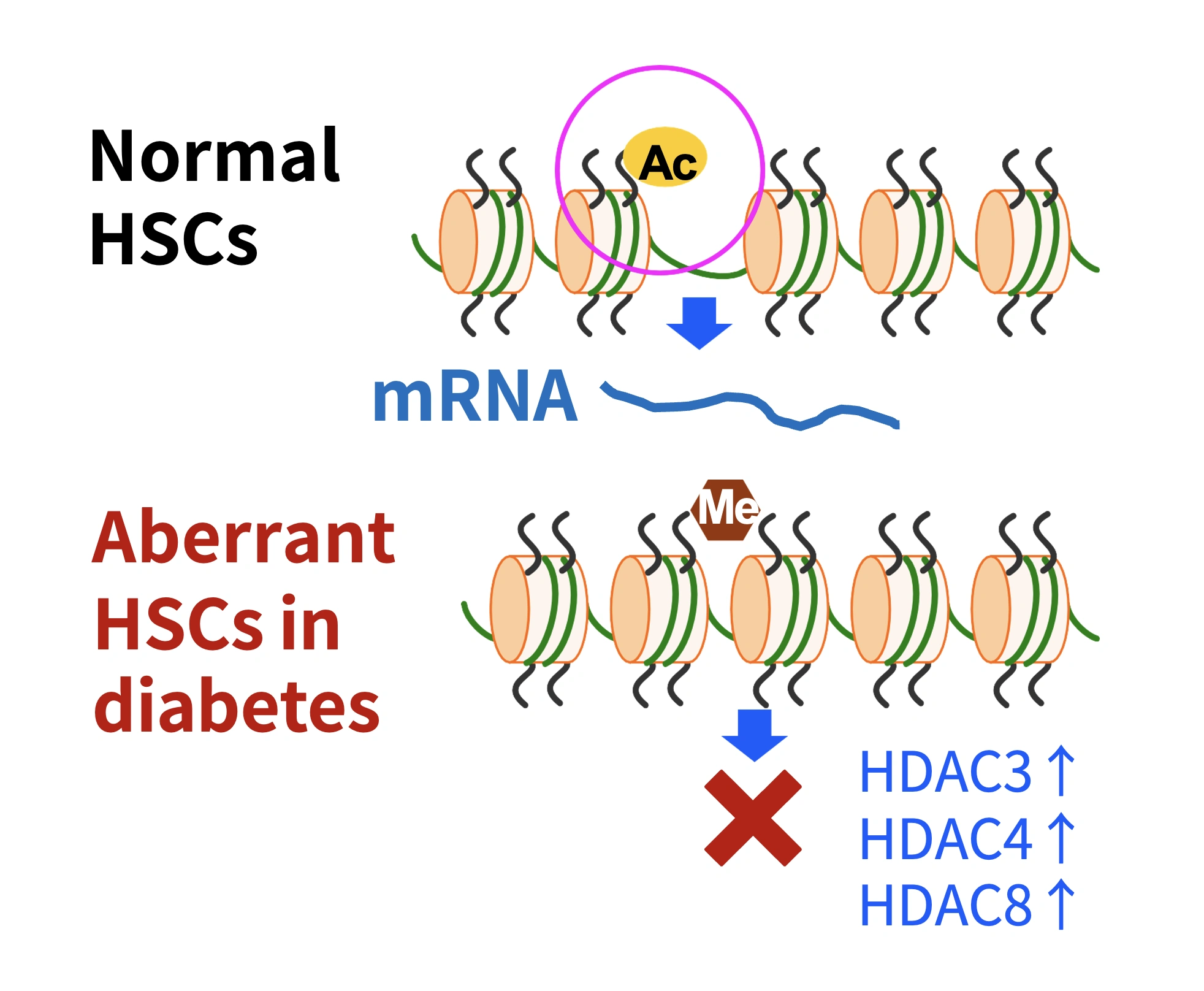
Target HDAC-related and other epigenetic abnormalities, with the aim of normalizing or eliminating abnormal cells thought to be diabetes stem cells.
STEP 3
Restore Natural Regenerative Capacity

By relieving the effects of pathological cells, we aim to restore pancreatic beta-cell regeneration and the body’s own insulin secretion, enabling normal glucose metabolism to persist after treatment ends.
FROM MICE TO HUMANS
The next step is to demonstrate this in humans.
Complete remission in mice is an important research finding, but it does not establish that the same approach can treat diabetes in humans.
EXPLORATORY HUMAN STUDY
Exploratory Research in Human Peripheral Blood
Our research team has also conducted an exploratory pilot study using peripheral blood from people with type 2 diabetes and nondiabetic controls.
The study included:
Nondiabetic controls: 13
People with type 2 diabetes: 14
Researchers analyzed a cell population considered a candidate for diabetes stem cells and observed cells with features of candidate DSCs.
BIOZIPCODE™ AND CELL-TARGETED THERAPY
Toward selectively targeting diabetes stem cells
HDAC inhibitors do not act only on diabetes stem cells. We are therefore studying investigational therapies that use Biozipcode™ cell-targeting technology to target these cells more selectively.
By combining candidate Biozipcode™ sequences that recognize diabetes stem cells with therapeutic molecules, we aim to:
- improve drug delivery to target cells
- reduce exposure of healthy tissues
- optimize the required dose
- improve the therapeutic index
These are our development goals.
5-ALA AS A RESEARCH CANDIDATE
About 5-ALA
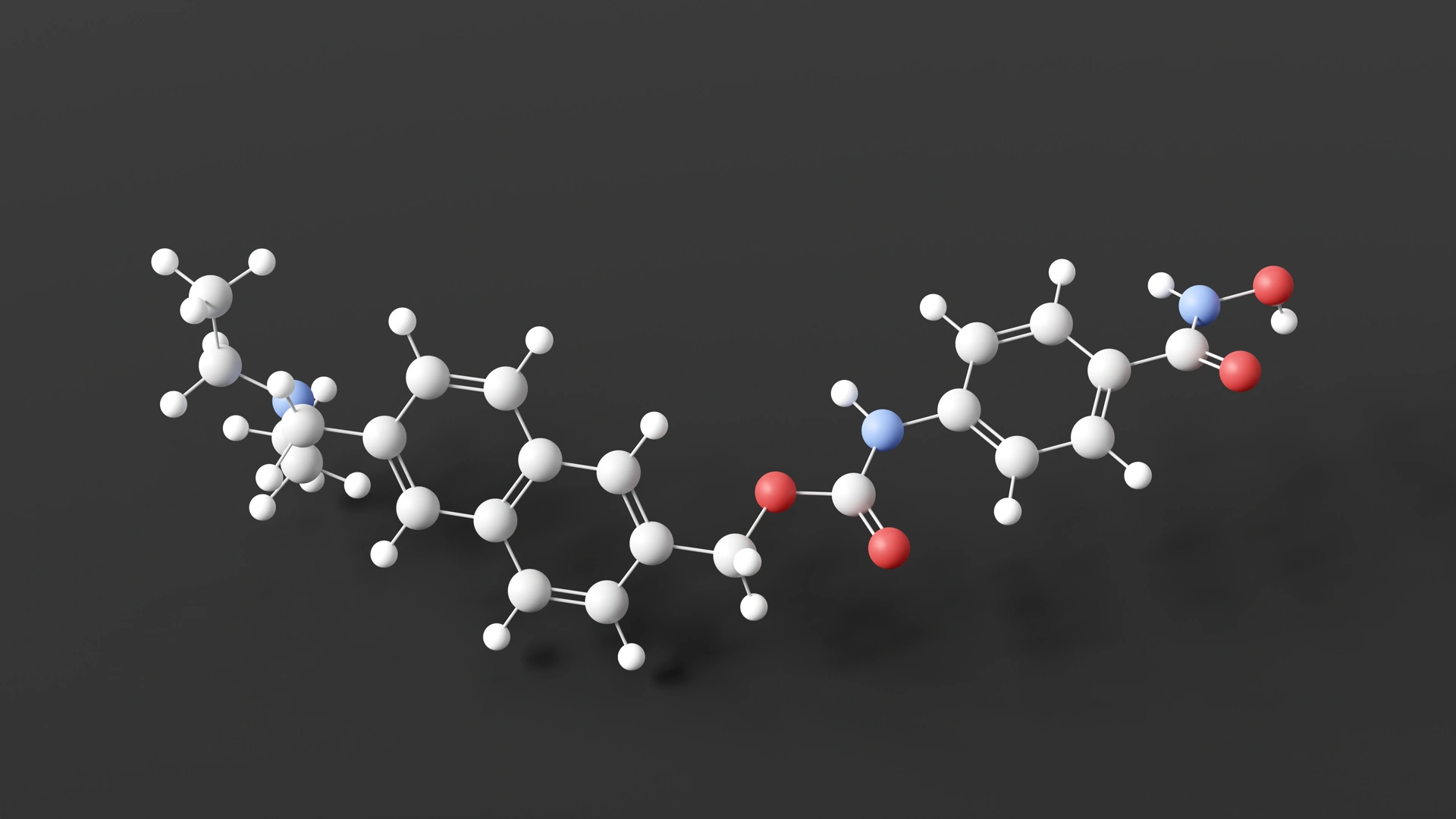
Biozipcode, Inc. is also investigating 5-ALA as one potential candidate for diabetes therapy.
5-ALA is a naturally occurring substance involved in mitochondrial heme synthesis and energy metabolism. Several human clinical studies have examined its relationship with glucose metabolism.
However, 5-ALA has not been shown to induce complete remission of diabetes.Nor is it appropriate to describe 5-ALA as an established HDAC inhibitor or a curative medicine for diabetes.
We consider it a research candidate. We are drawing on existing human safety and metabolic data while investigating its mechanistic relationship with diabetes stem cell research and assessing an appropriate clinical development path.

OUR GOAL
From a condition managed for life
to lasting health after treatment ends.
By “complete remission,” we mean more than a temporary fall in blood glucose or normal values maintained only while a patient is taking medication.
Our R&D goal is recovery of the body’s own glucose regulation and a sustained healthy metabolic state after treatment ends.
Achieving this requires integrated research into
blood glucose management
+
addressing abnormal cells involved in disease
+
beta-cell regeneration
+
restoring immune function
+
verification using biomarkers
as interconnected areas.

From Science to Better Care.
To bring research into real-world use, we work with pharmaceutical companies, research institutions, healthcare providers, businesses, investors, and supporters in Japan and abroad.
Research Achievements

Explore publications, patents, and conference presentations from years of research into diabetes, hematopoietic stem cells, cell targeting, and related fields.

Explore key publications on diabetes stem cells, diabetic complications, and complete remission research that underpin our R&D.

Explore our intellectual property work in diabetes treatment, diagnostics, abnormal stem cells, and Biozipcode™ to help bring research findings into practical use.

Explore Biozipcode research and activities through research videos, conference presentations, lectures, and seminars.